What Neuroscience Tells Us About the Overthinking Brain
Overthinking feels like a personal failing. But brain imaging research tells a different story. Your brain has a built-in tendency to wander, reflect, and replay. For some people, that system goes into overdrive.
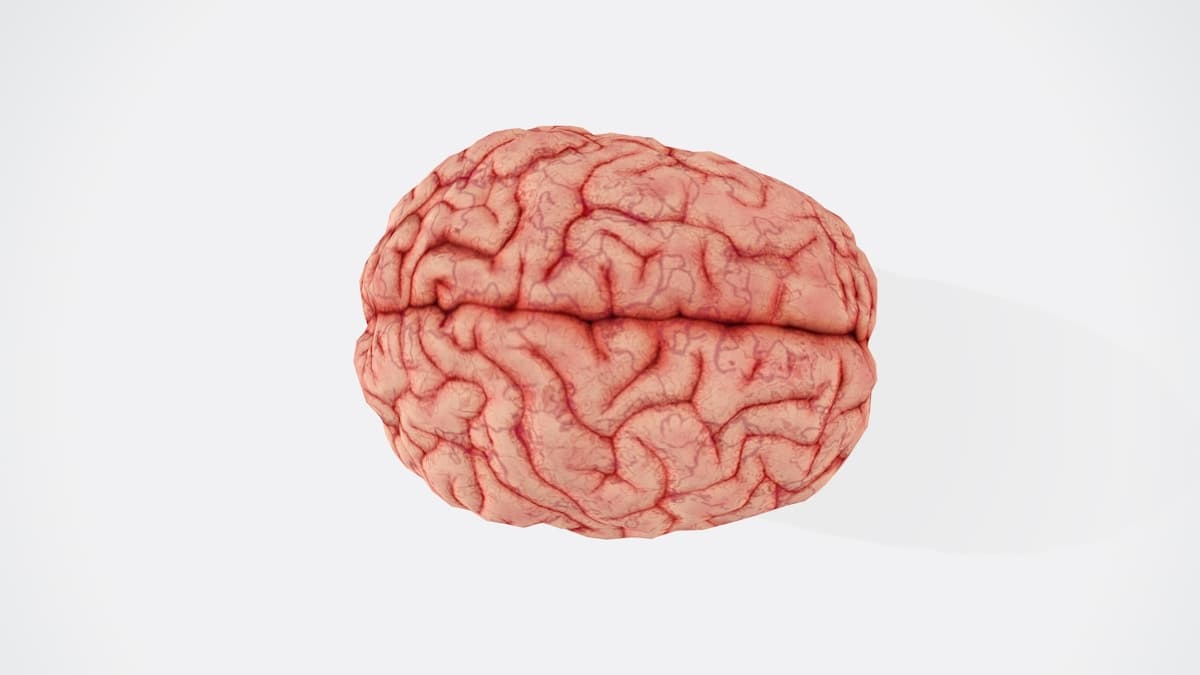
The neuroscience of overthinking has advanced significantly in the past two decades. Researchers can now observe what happens inside the brain when someone gets stuck in repetitive thought loops. The findings are both reassuring and illuminating. Overthinking isn't a character flaw. It's a pattern rooted in how your brain is wired, and that wiring can be changed. Understanding the overthinking brain starts with a network that scientists didn't even know existed until relatively recently.
The default mode network: the neuroscience of overthinking
In 2001, Marcus Raichle, a neurologist at Washington University in St. Louis, published a landmark paper in the Proceedings of the National Academy of Sciences that identified what he called the brain's default mode network (DMN). This was a surprising finding. Researchers had long assumed that the brain was relatively quiet when not performing a task. Raichle's work showed the opposite. When you stop focusing on the external world, a specific set of brain regions becomes more active, not less.
The DMN includes the medial prefrontal cortex, the posterior cingulate cortex, and parts of the temporal lobe. These regions light up during self-referential thinking. Reflecting on your past. Imagining future scenarios. Considering what other people might be thinking about you. Evaluating your own behavior. In other words, the DMN activates during exactly the kinds of mental activity that overthinkers know all too well.
Your brain doesn't go quiet when you stop working. It switches to a default mode that specializes in self-reflection, mental time travel, and social reasoning. For overthinkers, this network can become overactive and hard to disengage from.
The DMN serves important functions. It's involved in autobiographical memory, planning, and understanding social dynamics. You need it. The problem arises when the DMN stays active even when you're trying to focus on something else, or when its activity becomes dominated by negative, repetitive content.
Mind wandering and unhappiness: what the data shows
In 2010, Matthew Killingsworth and Daniel Gilbert, psychologists at Harvard University, published a study in Science that tracked the real-time thoughts and feelings of over 2,000 adults using a smartphone app. The study pinged participants at random moments throughout the day and asked three simple questions: What are you doing right now? Is your mind wandering? How happy do you feel?
The results were striking. People's minds wandered roughly 47% of the time, regardless of the activity. And mind wandering consistently predicted lower happiness, even when people were doing unpleasant tasks. In other words, people were happier while focused on something boring than while their minds were drifting freely.
Killingsworth and Gilbert concluded that “a wandering mind is an unhappy mind.” This doesn't mean all mind wandering is harmful. Positive daydreaming can be enjoyable and even creative. But the data showed that most mind wandering trends toward neutral or negative content. When your brain is left to its own devices, it gravitates toward problems, threats, and unresolved situations.
If you suspect your mind wanders more than average, or that it tends to land in negative territory, our free overthinking quiz can help you assess where you fall on the spectrum.

The overthinking brain and rumination
The connection between the DMN and mental health goes deeper than general unhappiness. J. Paul Hamilton, a neuroscientist who has conducted research at Stanford University, has studied the relationship between default mode network activity and depression. His brain imaging research has found that people with depression show increased connectivity within the DMN, particularly in the subgenual prefrontal cortex. This region is involved in self-referential processing and emotional regulation.
Hamilton's work suggests that in depression, the DMN becomes essentially “stuck.” Instead of flexibly activating when you're at rest and then quieting down when you need to focus, it stays persistently active, flooding the mind with self-focused, often negative thoughts. This maps closely to what clinicians call rumination: the repetitive, passive, self-focused thinking that is one of the strongest predictors of depression.
Brain imaging research shows that in people who ruminate, the default mode network doesn't properly disengage when it should. The brain gets stuck in self-referential loops instead of flexibly shifting between internal reflection and external focus.
This has practical implications. If overthinking were purely a choice, you could simply decide to stop. But the research shows it involves real differences in brain network dynamics. The good news is that these dynamics are not fixed. They can be changed through specific practices.
For a deeper look at the relationship between overthinking and rumination, see our upcoming post on understanding rumination.
How the overthinking brain differs from a focused brain
Your brain operates through competing networks. When the DMN is active (internal focus, self-reflection), the task-positive network (TPN) is typically suppressed, and vice versa. The TPN activates when you're engaged with external tasks: solving a math problem, playing a sport, having an absorbing conversation.
In healthy brain function, these two networks alternate smoothly. You finish a task, your mind wanders for a bit, then you re-engage with something external. The transitions are fluid. In people who overthink heavily, this switching mechanism appears less efficient. The DMN intrudes during tasks that should suppress it. You're trying to read a book, but your brain keeps pulling you back to that conversation from yesterday. You're in a meeting, but half your attention is on a worry that has nothing to do with what's being discussed.
This isn't laziness or poor discipline. It's a measurable difference in how brain networks communicate. And it explains why overthinkers often feel exhausted even when they haven't done anything physically demanding. The constant activation of the DMN consumes mental energy.
What meditation does to the default mode network
Judson Brewer, a psychiatrist and neuroscientist at Brown University, has conducted some of the most compelling research on how meditation affects the DMN. In a study published in the Proceedings of the National Academy of Sciences in 2011, Brewer and colleagues used fMRI to compare brain activity in experienced meditators versus non-meditators. The results showed that experienced meditators had significantly reduced activity in key DMN regions during meditation, particularly the medial prefrontal cortex and the posterior cingulate cortex.
Even more interesting, the meditators showed reduced DMN activity not just during meditation, but also at rest. Their brains had developed a different baseline. They also showed stronger connections between DMN regions and brain areas involved in cognitive control, suggesting that meditation helps the brain catch and redirect mind wandering more effectively.
Brewer's research showed that experienced meditators had reduced default mode network activity even when they weren't meditating. Regular practice appears to change the brain's resting state itself, not just what happens during a meditation session.
This doesn't mean you need to become a monk. Brewer's subsequent work has explored brief, accessible mindfulness practices that can begin shifting these patterns. The key finding is that the brain's tendency toward overthinking is plastic. It can be shaped by experience and practice.
Practical implications: working with your brain, not against it
Understanding the neuroscience doesn't instantly solve the problem, but it changes how you approach it. Here are some research-informed strategies.
Engage the task-positive network deliberately. When you notice yourself spiraling, the goal isn't to suppress the DMN through force of will. Instead, give your brain something external and engaging to focus on. Activities that require active attention naturally suppress DMN activity. This is why physical exercise, hands-on projects, and absorbing conversations can all provide relief from overthinking. They're not distractions in a negative sense. They're engaging a competing brain network.
Externalize your thoughts. When thoughts loop internally, they can feel infinite and overwhelming. Writing them down changes the dynamic. You move from passive rumination (DMN-driven) to active processing (which engages different brain systems). Our Thought Dumper tool is built for exactly this. It gives you a no-pressure space to get everything out of your head so you can see your thoughts rather than just be consumed by them.
Practice brief mindfulness. You don't need 30-minute meditation sessions. Even a few minutes of focused breathing, where you redirect attention to physical sensation each time your mind wanders, begins training the brain's ability to disengage from the DMN. Consistency matters more than duration.
Reduce unstructured downtime when you're vulnerable. This doesn't mean filling every moment with activity. Rest is essential. But if you know that certain times of day tend to trigger spiraling (lying in bed at night, sitting alone after work), having a low-effort plan can help. A podcast, a walk, a simple routine. The goal is to gently occupy the brain so the DMN doesn't hijack your evening.
Not sure whether your thinking patterns cross the line from normal reflection into problematic overthinking? Take our free overthinking quiz for a quick assessment. You can also explore our full set of free mental health tools.
The neuroscience of overthinking is still evolving
Researchers are continuing to study the DMN and its relationship to mental health. New work is exploring how network connectivity changes with different types of therapy, how individual differences in DMN activity relate to personality traits, and whether neurofeedback (training people to consciously alter their brain activity) could help chronic overthinkers.
What we already know is significant. Overthinking is not a moral failing. It has identifiable neural correlates. The brain regions involved are the same ones responsible for useful capacities like self-awareness, empathy, and planning. The problem isn't that you have a default mode network. Everyone does. The problem is when that network runs unchecked, filling your mind with repetitive, negatively-toned content that you struggle to disengage from.
The encouraging takeaway from the research is that the brain changes in response to what you practice. Meditation, cognitive behavioral strategies, and even simple habit changes can alter how your brain networks operate over time. You're not stuck with the overthinking brain you have now.
For more on recognizing overthinking patterns in your own life, read our guide to identifying whether you're an overthinker.
Sources:
- Raichle, M.E., MacLeod, A.M., Snyder, A.Z., Powers, W.J., Gusnard, D.A., & Shulman, G.L. (2001). A default mode of brain function. Proceedings of the National Academy of Sciences, 98(2), 676-682.
- Killingsworth, M.A. & Gilbert, D.T. (2010). A wandering mind is an unhappy mind. Science, 330(6006), 932.
- Hamilton, J.P., Furman, D.J., Chang, C., Thomason, M.E., Dennis, E., & Gotlib, I.H. (2011). Default-mode and task-positive network activity in major depressive disorder. Biological Psychiatry, 70(4), 334-341.
- Brewer, J.A., Worhunsky, P.D., Gray, J.R., Tang, Y.Y., Weber, J., & Kober, H. (2011). Meditation experience is associated with differences in default mode network activity and connectivity. Proceedings of the National Academy of Sciences, 108(50), 20254-20259.
Ready to challenge your overthinking?
Take the free quiz to find your overthinking score, or try our free tools — no signup needed.